
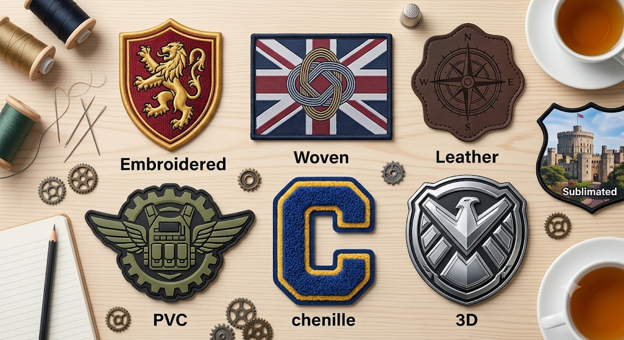
Anyone researching custom patches UK suppliers quickly runs into the same wall: the design brief is ready, but the patch type is not. Woven, PVC, chenille, leather, appliqué, sequin, embroidered, 3D embroidery, silicone, the list is longer than most buyers expect, and each option changes the price, the texture, the durability, and how the finished patch reads from across a room.
This guide breaks down every major type of custom patches available today, compares the ones that get confused most often, PVC versus embroidered, woven versus embroidered, and embroidered versus printed, and gives a practical framework for choosing the right one for a uniform, a hat, a jacket, or a merchandise drop.
Why the Patch Type You Choose Matters
The patch type is not a finishing detail, it is the foundation the whole design sits on. A logo with fine text will vanish on chenille but read perfectly on a printed or fine-embroidered patch.
A patch that lives outdoors, on a jacket or a bag, needs different backing and material than a patch destined for a soft plush toy. Getting this decision right the first time avoids reprints, wasted budget, and a finished product that does not match the mockup.
A detailed breakdown of patch types, backings, and borders is worth a read if backing hardware, like Velcro, iron-on film, or sew-on edges, is still an open question alongside the patch type itself.
Types of Custom Patches at a Glance
The table below compares the nine most requested patch styles by texture, durability, and typical use case, before each one is covered in detail further down.
| Patch Type | Texture & Look | Best For |
|---|---|---|
| Woven Patches | Flat, fine detail, thread-based | Small logos, text-heavy designs |
| Embroidered Patches | Raised thread, classic textured finish | Uniforms, badges, jackets |
| Chenille Patches | Thick, fuzzy, tufted yarn | Varsity jackets, letterman patches |
| PVC Patches | Rubber-like, glossy, 3D moulded | Tactical gear, outdoor and marine use |
| Leather Patches | Smooth or debossed, natural material | Hats, bags, premium branding |
| Appliqué Patches | Fabric layered under embroidery outline | Large bold designs, mascots, team logos |
| equin Patches | Reflective, colour-shifting, reversible | Fashion, dance costumes, novelty items |
| 3D Embroidery Patches | Puffed, raised foam-backed stitching | Caps, bold lettering, premium merch |
| Silicone Patches | Soft rubber, seamless, waterproof | Sportswear, activewear, wet-weather gear |
Woven Patches
Woven patches are made by weaving polyester thread into a flat, tightly bound patch rather than stitching over a fabric base. This makes them the go-to choice when a design has fine text, thin lines, or gradients that embroidery thread cannot reproduce cleanly.
The finish is smooth rather than raised, which keeps the patch lightweight and low-profile on caps, sportswear, and small merchandise. Anyone comparing custom woven patches against embroidery for a detailed logo will usually find woven construction holds crisp edges far better.
Embroidered Patches
Embroidered patches are the traditional choice, stitched with thread onto a twill or felt backing to create a raised, textured surface.
They suit bold logos, badges, and uniform patches where a tactile, classic finish matters more than fine detail. Thread colours are limited to what a machine can stitch cleanly, so very small text or photographic gradients are usually better suited to woven or printed alternatives.
For most military, workwear, and club patches, custom embroidered patches remain the standard because of their durability and recognisable texture.
Chenille Patches
Chenille patches use a thick, looped yarn to create the fuzzy, varsity-style texture seen on letterman jackets and collegiate merchandise. They are bold by design, best suited to large lettering, numbers, and simple mascot shapes rather than intricate artwork.
The tufted surface gives chenille a retro, tactile presence that flat patch types cannot match. Brands building a varsity or collegiate line typically order custom chenille patches alongside embroidered patches for smaller supporting details on the same garment.
PVC Patches
PVC patches are moulded from soft rubber-like polyvinyl chloride, giving them a glossy, 3D finish with sharply defined edges. Because the material is naturally water-resistant and does not fray, PVC patches are the preferred option for outdoor, marine, tactical, and workwear applications where a stitched patch would degrade faster.
Colour transitions are smooth rather than textured, closer to a moulded logo than a stitched one. Teams needing rugged, weatherproof branding often specify custom PVC patches specifically for their resistance to cracking, fading, and moisture.
Leather Patches
Leather patches, made from genuine or faux leather, are stamped or laser-engraved rather than stitched, giving them a debossed, premium look. They are a favourite for caps, denim, bags, and craft goods where the brand wants a rustic or upscale feel rather than a sporty one.
Because the design is engraved into the material itself, colour options are limited, usually the natural leather tone with a darker or lighter engraved contrast, but the tactile quality more than makes up for the reduced colour palette on premium product lines.
Appliqué Patches
Appliqué patches combine a layer of cut fabric with an embroidered outline stitched around the edge, which fills in large areas of colour without the thread density, and cost, of a fully embroidered patch. This makes them a practical choice for oversized designs, mascots, and team crests where solid embroidery would otherwise be stiff and heavy. The fabric layer also keeps the patch flexible, which helps it sit comfortably on soft garments like fleece and jerseys.
Sequin Patches
Sequin patches are built from small, overlapping reflective discs sewn onto a fabric base, often designed to be reversible so brushing the sequins in one direction reveals a second colour or pattern underneath. They are almost exclusively a fashion and novelty product, used on jackets, bags, dancewear, and event merchandise where movement and shine matter more than fine detail. They are rarely chosen for corporate or uniform branding because the reflective surface does not reproduce small text or logos cleanly.
3D Embroidery Patches
3D embroidery Patches, also called puff embroidery, stitches thread over a raised foam base so the finished design sits noticeably higher than standard embroidery. It works especially well on caps and bold lettering, where the added depth makes a logo pop under light. The technique needs simpler shapes than flat embroidery, since fine detail tends to get lost over the raised foam.
A side-by-side look at 3D embroidery versus regular embroidery is useful before committing, since the two techniques suit different design complexities. Buyers set on the raised look can order custom 3D embroidery patches directly for headwear and premium merchandise runs.
Silicone Patches
Silicone patches are moulded from soft, flexible rubber and heat-pressed or sewn onto the garment, producing a seamless, waterproof finish with no visible thread. They are a strong match for sportswear, swimwear, and activewear, where a stitched patch could irritate skin or trap moisture.
The material flexes with the fabric instead of sitting rigid on top of it, which keeps the patch comfortable during movement. Activewear brands increasingly choose custom silicone patches over embroidered badges for exactly this reason.
PVC vs Embroidered Patches: Which Should You Choose?
This is one of the most common comparisons buyers search for is pvc vs embroidered patches, and the answer usually comes down to environment. PVC suits harsh, wet, or high-friction conditions, while embroidery suits a classic, textured look for uniforms and everyday apparel.
| Factor | PVC Patches | Embroidered Patches |
|---|---|---|
| Water resistance | Excellent, fully sealed material | Moderate, thread can absorb moisture |
| Texture | Smooth, glossy, moulded | Raised, stitched, tactile |
| Best environment | Outdoor, tactical, marine | Uniforms, jackets, everyday wear |
| Detail level | Good for bold shapes and colour blocks | Good for classic logos and lettering |
| Typical feel | Modern, rugged | Traditional, classic |
Woven vs Embroidered Patches: Key Differences
People often get confused about woven vs embroidered patches, because they both use thread, but the construction method changes the outcome significantly. Woven patches are flat and detailed, embroidered patches are raised and textured.
| Factor | Woven Patches | Embroidered Patches |
|---|---|---|
| Surface | Flat, low-profile | Raised, 3D texture |
| Detail capability | Excellent for fine text and thin lines | Limited on small or intricate detail |
| Feel | Smooth to the touch | Textured, tactile |
| Common use | Small logos, sportswear, labels | Badges, uniforms, jackets |
| Cost at small sizes | Generally more cost-efficient | Can require larger minimum sizing |
Embroidered vs Printed Patches: What’s the Difference?
The difference between embroidered vs printed patches are, printed patches use dye-sublimation or direct printing to place a full-colour, photographic-quality image onto fabric, rather than building the design from stitched thread.
This makes printed patches the better option for designs with gradients, shading, or complex artwork that thread simply cannot replicate. Embroidery, by contrast, offers a textured, premium feel that printed patches cannot match.
Brands weighing both options for a single project sometimes explore custom print embroidery as a hybrid approach that blends printed detail with embroidered edging.
| Factor | Embroidered Patches | Printed Patches |
|---|---|---|
| Detail level | Limited by thread and stitch count | Photographic detail, unlimited colours |
| Texture | Raised, tactile | Flat, smooth |
| Durability | Very high, resists fading and cracking | Good, but print can fade faster over time |
| Perceived value | Premium, classic | Modern, vibrant |
| Best for | Logos, uniforms, badges | Detailed art, photo-style designs, gradients |
How to Choose the Right Custom Patch Type
A quick checklist before placing an order:
- Check the garment: rigid embroidery and chenille suit jackets and caps, while silicone and PVC suit activewear and outdoor gear.
- Check the artwork: fine text and gradients favour woven or printed patches, bold shapes favour embroidery, chenille, or appliqué.
- Check the environment: PVC and silicone resist water and abrasion better than stitched patches.
- Check the budget and quantity: woven and printed patches are often more cost-efficient at smaller sizes, while chenille and 3D embroidery carry a premium for the extra material and technique.
- Check the finish: leather and sequin patches are chosen for aesthetic impact rather than technical durability.
Custom Patches UK: Ordering, Backings & Turnaround
Once the patch type is settled, the backing and attachment method still need deciding. Most custom patches UK orders ship with iron-on, Velcro, or sew-on backing, depending on whether the patch needs to be removable or permanent.
Iron patches work well for retail and one-off applications, while sew-on patches are the more durable choice for uniforms and workwear that go through regular washing.
Turnaround times, minimum order quantities, and proofing steps vary by patch type, so it is worth confirming these details alongside the material choice before artwork is finalised.
Frequently Asked Questions
What is the most durable type of custom patch?
PVC and silicone patches are generally the most durable for wet or high-friction environments, since neither material frays, cracks, or absorbs moisture the way stitched patches can over time.
Which patch type is best for a small, detailed logo?
Woven patches handle fine text and thin lines better than embroidery, chenille, or appliqué, since the flat, tightly woven construction reproduces detail more precisely than raised stitching.
Are PVC patches better than embroidered patches?
Neither is universally better, PVC suits outdoor, tactical, and wet-weather use, while embroidered patches suit uniforms, jackets, and everyday apparel where a classic textured look is preferred.
What is the difference between woven and embroidered patches?
Woven patches are flat and detailed, made by weaving thread into the patch itself, while embroidered patches are raised and textured, made by stitching thread onto a fabric backing.
Should I choose embroidered or printed patches?
Choose embroidery for a raised, premium, long-lasting texture, and choose printed patches when the design has gradients, shading, or fine photographic detail that thread cannot reproduce.
What are 3D embroidery patches used for?
3D, or puff, embroidery is mainly used on caps and bold lettering, where the raised foam base makes the design stand out more than flat embroidery.
Can I mix patch types on one order?
Yes, many uniform and merchandise ranges combine patch types, for example embroidered badges with a chenille varsity patch, since each type can be produced and shipped together.
How do I know which backing to choose for a custom patch?
Iron-on backing suits lighter, occasional-use items, while sew-on and Velcro backings suit uniforms, workwear, and anything that will be washed or handled regularly.
Matching the Right Patch Type to Your Brand
There is no single best patch, only the best patch for a specific garment, budget, and environment. Fine detail points toward woven or printed patches, texture and tradition point toward embroidery or chenille, and durability against weather points toward PVC or silicone. Leather, appliqué, and sequin round out the list for brands prioritising look and feel over technical performance.
Matching the material to the design brief first, before finalising artwork, is the single best way to avoid reprints and get a finished patch that matches the mockup on the first run and The Custom Patches UK have got you covered on this get your free quote today and start your patch project.